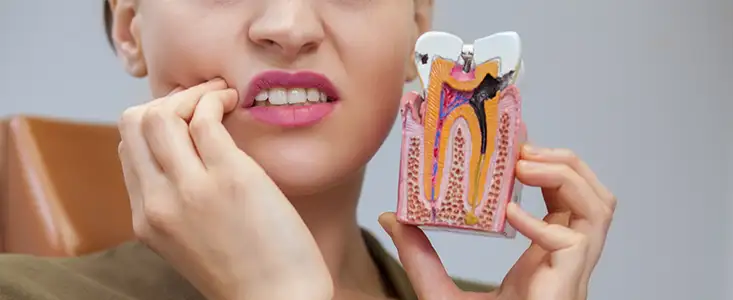

The holidays bring family gatherings, favorite foods, and lots of smiles. But dental emergencies don’t always take a holiday break!
Some holiday dental emergencies can wait until your dentist’s office reopens, but others need immediate attention. Knowing what to do in those first few minutes can help relieve discomfort, protect your teeth, and prevent a small problem from becoming bigger.
If you experience a dental emergency during Thanksgiving or the holiday season, here’s what you can do before you see a dentist.
Learn More: Atkins & Anderson DDS Emergency Services
1. A Cracked or Broken Tooth
It’s not unusual for someone to crack or chip a tooth while eating holiday treats.
A cracked tooth can cause sharp pain, sensitivity to hot or cold foods, or discomfort. Sometimes, a small chip doesn’t hurt at all, but that doesn’t mean it should be ignored.
What to do:
- Gently rinse your mouth with warm water to clean the area.
- If there’s swelling, apply a cold compress to the outside of your cheek.
- If you can find the broken piece of tooth, save it in a small container.
- Avoid chewing on that side of your mouth.
- Stick with soft foods until you can see your dentist.
If the tooth has a sharp edge, dental wax can help cover it temporarily and protect your tongue or cheek.
When to call the dentist: Contact your dentist as soon as possible, even if the chip seems minor. A cracked tooth can worsen if left untreated.
2. A Knocked-Out Tooth
A knocked-out permanent tooth is one of the most urgent dental emergencies.
The good news? Acting quickly can help save the tooth.
What to do:
- Pick up the tooth by the crown (the white part you normally see), not the root.
- If it’s dirty, gently rinse it with milk or saline. Avoid scrubbing or touching the root.
- If possible, carefully place the tooth back in its socket and hold it in place.
- If you cannot put it back in the socket, keep it moist in a container of milk.
- Contact a dentist immediately.
Time matters! A permanent tooth has the best chance of being saved if it’s treated within 30 minutes, although you should still seek care even if more time has passed.
A knocked-out baby tooth should NOT be placed back into the socket. Doing so could damage the developing permanent tooth underneath. Contact your child’s dentist for guidance.
3. A Sudden or Severe Toothache
Holiday meals can be especially uncomfortable when you’re dealing with a toothache.
A toothache may be caused by a cavity, a cracked tooth, an infection, or inflammation inside the tooth. If the pain becomes severe or is accompanied by swelling, take it seriously.
What to do:
- Gently rinse your mouth with warm salt water.
- Carefully floss around the tooth to remove any food that may be trapped.
- Apply a cold compress to the outside of your cheek if there’s swelling.
- Take an over-the-counter pain reliever, if it’s safe for you.
- Avoid very hot, cold, or sugary foods and drinks.
Avoid placing aspirin directly on the tooth or gums, as this can irritate or burn the surrounding tissue.
When to call the dentist: See a dentist as soon as possible if you have a persistent or severe toothache. If you develop facial swelling, fever, or a bad taste or drainage in your mouth, you may have an infection that needs prompt treatment.
4. A Lost Filling or Dental Crown
Losing a filling or crown while enjoying a holiday meal can be frustrating, especially when it leaves a tooth feeling sensitive or exposed.
A missing filling or crown doesn’t always cause immediate pain, but the exposed tooth may be more vulnerable to damage.
What to do:
- If you find the crown, save it and bring it with you to your dental appointment.
- Gently rinse the crown and your mouth.
- Keep the area clean and avoid chewing on that side.
- Avoid sticky, crunchy, or hard foods.
- If a crown has come off, temporary dental cement from a pharmacy may help hold it in place until your appointment. Follow the product directions carefully.
Never use superglue or household adhesives to reattach a crown.
When to call the dentist: Schedule an appointment as soon as you can. Even if the tooth isn’t hurting, it’s best to have a missing filling or crown repaired before additional damage occurs.
5. Swollen or Bleeding Gums
Holiday stress, changes in eating habits, and skipped brushing or flossing can sometimes contribute to irritated gums. However, significant gum swelling, bleeding, or tenderness may signal a more serious dental problem.
What to do:
- Rinse gently with warm salt water.
- Continue brushing carefully with a soft-bristled toothbrush.
- Floss gently if food is trapped between your teeth.
- Avoid foods that irritate the area.
- Use a cold compress if you notice swelling.
If you have localized swelling, a painful bump on the gums, or pus, you may have a dental abscess.
When to call the dentist: Sudden or significant swelling should be evaluated promptly. Facial swelling, fever, or worsening pain can indicate an infection. If swelling makes it difficult to breathe or swallow, seek emergency medical care immediately.
6. A Dental Abscess or Signs of Infection
A dental abscess is an infection that develops around a tooth or in the gums. It can cause severe pain, swelling, tenderness, and sometimes a bad taste in your mouth.
Although it may be tempting to wait until after the holidays, a dental infection should never be ignored. Infections can spread beyond the original area and become serious.
What to do:
- Rinse gently with warm salt water.
- Use a cold compress to help reduce swelling.
- Take an over-the-counter pain reliever.
- Avoid trying to pop or drain the swollen area yourself.
- Contact a dentist or seek urgent dental care right away.
Important: A dental abscess requires professional evaluation and treatment. If you experience difficulty breathing or swallowing, rapidly spreading swelling, or swelling around the eye or neck, go to the emergency room immediately.
How to Prevent Holiday Dental Emergencies
Of course, the best dental emergency is the one that never happens! While accidents aren’t always preventable, a few simple precautions can help prevent holiday dental emergencies and protect your family’s smiles throughout the holiday season.
Be careful with hard foods. Avoid chewing ice, hard candy, and popcorn kernels. Be careful with hard nuts and other crunchy treats.
Don’t use your teeth as tools. Opening packages, tearing tape, or cracking nuts with your teeth can lead to chips, cracks, and other damage.
Keep up with your dental routine. Busy schedules and holiday travel can make it easy to skip brushing and flossing. Try to maintain your normal routine, even on busy days.
Don’t ignore existing dental problems. If you already have a sensitive tooth, a loose crown, or a filling that needs attention, schedule an appointment before the holiday festivities begin.
Schedule regular dental checkups. Preventive visits can help identify cavities, weakened teeth, and other concerns before they turn into unexpected emergencies.
Learn More: Top 5 Dental Problems Dentists See in College Station, Texas
Enjoy the Holidays Without Letting a Dental Emergency Ruin the Fun
The holidays should be filled with laughter, good food, and time with the people you love – not an unexpected dental emergency!
Experiencing a dental emergency after hours? Don’t assume you have to wait until the next business day. Call Atkins & Anderson DDS at 979-846-1813. If our office is closed, listen to the voicemail for emergency contact information. Our team will help you determine the best next step.