

Why Early Airway Treatment Matters for Kids

Read below to learn how early airway and jaw development can shape your child’s overall health. Understanding the connection between breathing, sleep, facial growth, and dental development can help parents recognize potential airway concerns early and determine when an airway dentistry evaluation may be beneficial.
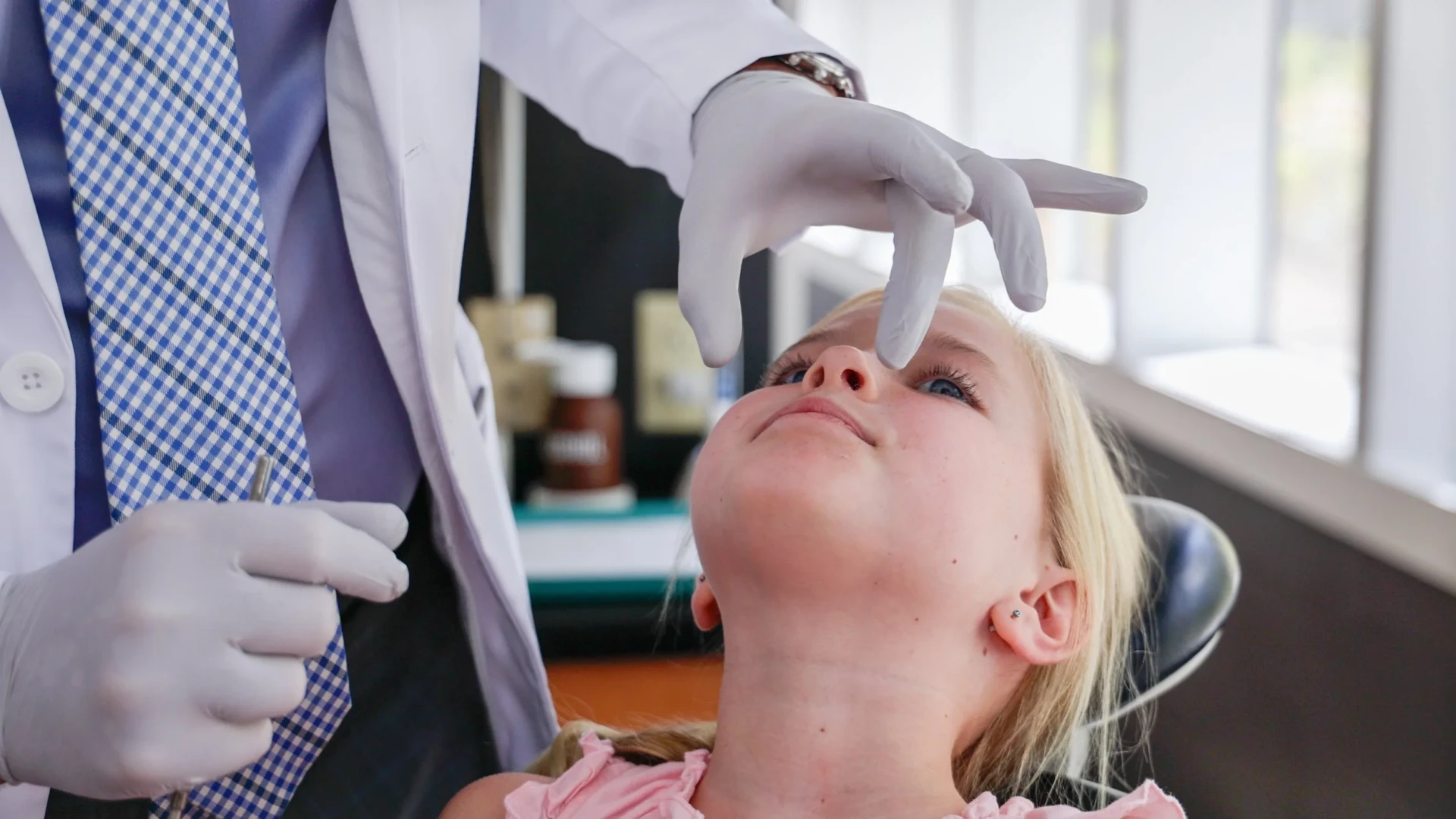
Dentist in gloves examining a young girl’s airway and nasal area while she reclines in a dental chair.

Airway dentistry focuses on how a child’s teeth, jaw development, oral structures, and breathing can work together. An airway-focused dental evaluation can help identify signs that may be affecting healthy breathing, sleep, and facial development.

During these early years, a child’s mouth, teeth, and jaw are still developing, which means small adjustments can make a big difference. Early intervention helps ensure proper alignment, breathing, and facial growth, with a lifetime of a healthy airway and breathing.

Children may benefit from an airway evaluation if they snore, breathe through their mouth, have restless sleep, grind their teeth, have crowded teeth, or experience daytime tiredness.

These small, comfortable devices gently guide jaw growth and create more space for developing teeth. By improving airway function, they can also help children breathe easier and sleep better at night. Supporting healthier growth and their overall well-being.

Better sleep, more energy during the day, and healthier long-term development are all possible through proper jaw growth and airway support. Early treatment can lead to improved focus, mood, and confidence, and often means less need for braces or orthodontic work later on.

Request a consultation today and start being proactive with your child’s airway development.

Children may benefit from an airway evaluation if they snore, regularly breathe through their mouth, grind their teeth, have restless sleep, struggle with nasal breathing, have crowded teeth, or show other signs of altered airway development. Early evaluation can help identify potential concerns while the jaw and facial structures are still developing.

There is no single age that is right for every child. An airway-focused dental evaluation can be helpful during the early stages of dental and facial development, particularly when parents notice signs such as mouth breathing, snoring, or crowded teeth.

How Jaw Development Affects Your Child’s Airway

Many airway problems begin with underdeveloped jaws. When the jaws don’t grow properly, there isn’t enough space for the tongue and airway—leading to sleep apnea, snoring, mouth breathing, TMJ pain, headaches, and more.

At Atkins & Anderson, we focus on jaw and airway development to treat the source of these issues, not just the symptoms.
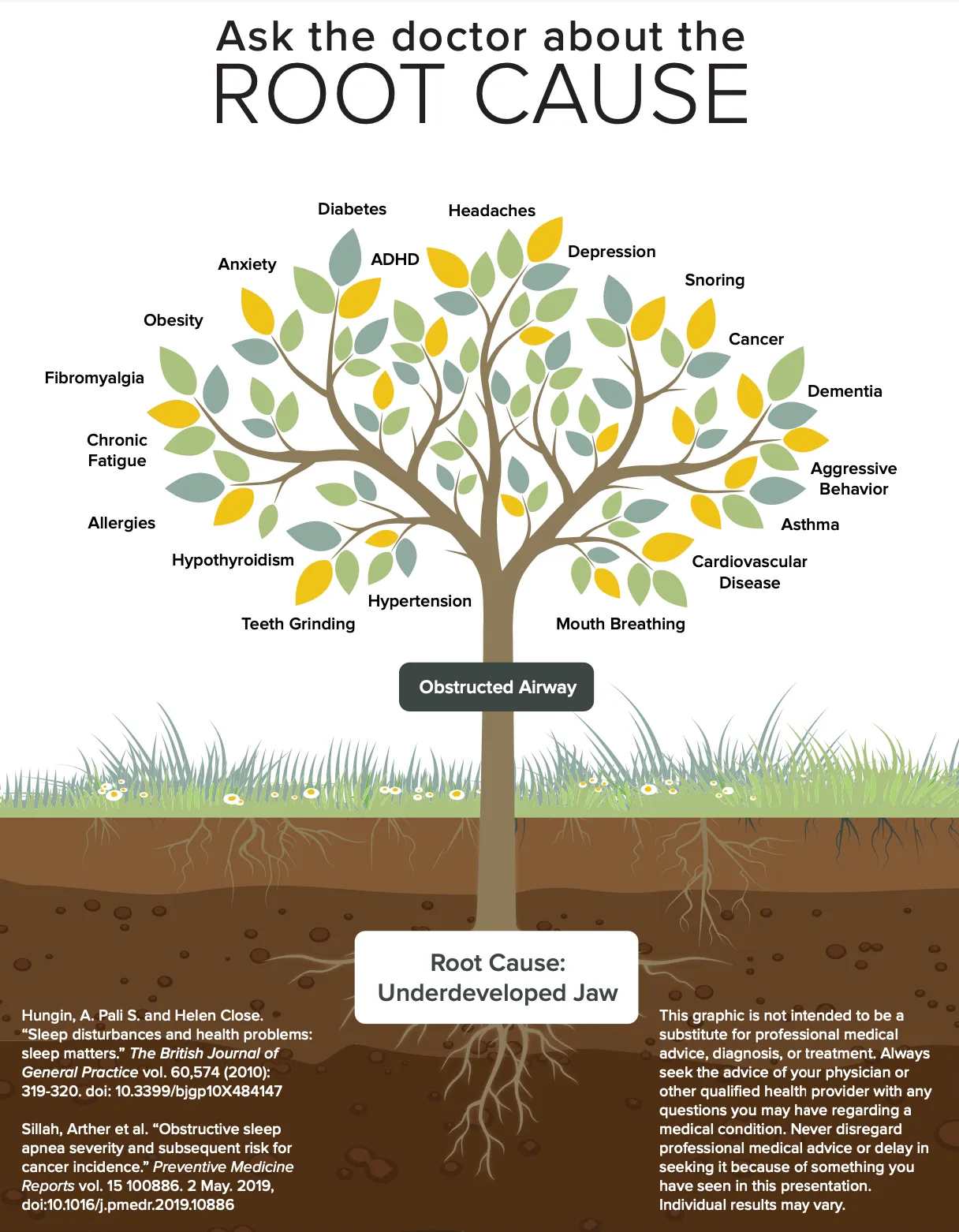
root cause diagram

More information from the ADA, click here to download. 

What to Expect During an Airway Dentistry Evaluation

Our process is simple, supportive, and focused on your child’s comfort.
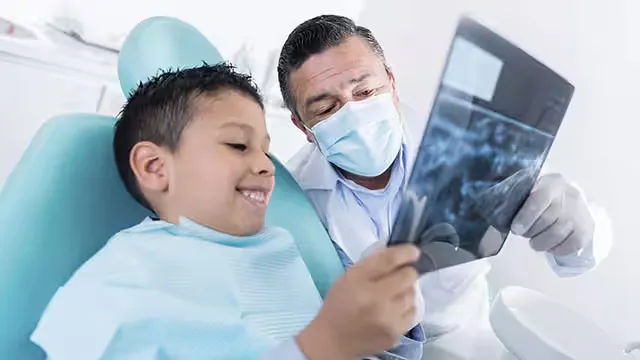
Smiling young boy in a dental chair holding and looking at a dental X-ray with a masked dentist beside him.

We’ll check your child’s breathing, teeth, and jaw development to see if airway treatment is needed.

Every child’s plan is tailored — with the right appliance or aligner for their growth needs.

We’ll monitor your child’s progress, review any changes, and make small adjustments as needed to keep everything moving smoothly and on track.

  1. Better developed airway.
  2. Less risk for sleep apnea as a child and adult.
  3. Prevention and resolution of airway related symptoms.
  4. Less chance for relapse crowding as an adult.
  5. Better performance in academics and sports.
  6. Better overall health.

Pediatric Airway Dentistry Intake Form

Does the child have any of these symptoms? *