

If you or your partner regularly hear snoring at night, you may have asked yourself, “Why do I snore?” It’s tempting to laugh it off as an annoying habit or simply part of getting older.
But chronic snoring isn’t always harmless.
In some adults, snoring can signal that the airway is becoming restricted during sleep, and the link between snoring and sleep apnea is one of the biggest reasons chronic snoring deserves a closer look. When breathing is disrupted night after night, it can affect more than your sleep. It may contribute to daytime fatigue, morning headaches, dry mouth, teeth grinding, difficulty concentrating, and other symptoms that can interfere with your quality of life.
At Atkins & Anderson DDS in College Station, we look beyond the teeth to understand how the airway, jaw, tongue, and oral structures work together. If you’re a chronic snorer or regularly wake up feeling tired despite getting a full night’s sleep, an airway evaluation may be worth considering.
Why Do I Snore? Common Causes in Adults
Snoring happens when airflow through the nose and throat becomes partially restricted during sleep. As air moves through a narrowed airway, the surrounding tissues can vibrate, creating the familiar sound of snoring.
Occasional snoring can happen to almost anyone. Congestion, allergies, sleeping position, alcohol, and other temporary factors can contribute.
The concern is regular or loud snoring, particularly when other symptoms are involved.
In some cases, the position of the jaw, tongue, and other oral structures can restrict the airway. When the airway narrows during sleep, muscles and soft tissues can relax and partially block airflow.
When Is Snoring a Sign of an Airway Problem?
Snoring by itself doesn’t necessarily mean you have a serious airway condition. However, persistent snoring combined with other symptoms deserves attention.
You may want to consider an adult airway evaluation if you experience:
- Loud or chronic snoring
- Waking up tired or unrested
- Daytime fatigue or sleepiness
- Morning headaches
- Dry mouth or sore throat when you wake up
- Mouth breathing during the day or at night
- Teeth grinding or clenching
- Jaw pain or tension
- Difficulty concentrating or “brain fog”
- Restless or poor-quality sleep
- Waking up choking or gasping
- Someone notices that you stop breathing during sleep
When several of these symptoms occur together, they could signal an airway issue.
Learn More: Adult Airway Dentistry in College Station
Snoring and Sleep Apnea: What’s the Connection?
Chronic snoring is one of the most common signs of obstructive sleep apnea (OSA), a condition in which the airway repeatedly narrows or closes during sleep, causing breathing to pause or become shallow. Not everyone who snores has sleep apnea, but loud, frequent snoring, especially with gasping, choking, or pauses in breathing, is worth discussing with a healthcare provider.
Sleep apnea can only be diagnosed through a sleep study ordered by a physician. As airway-focused dentists, our role is to recognize the warning signs, evaluate the oral structures that may be contributing, and help you take the right next step.
If your breathing is repeatedly disrupted during the night, your body may not be getting the uninterrupted, restorative sleep it needs.
Over time, poor sleep can affect how you feel and function throughout the day.
That’s why you shouldn’t dismiss chronic snoring as an inconvenience for your partner. It can be an important clue that something is interfering with healthy breathing while you sleep.
Learn More: How Your Airway Affects Your Sleep and Health
Is Snoring Bad for Your Health?
Occasional, light snoring usually isn’t a cause for concern. But chronic snoring can be bad for your health when it’s a sign that your breathing is being disrupted during sleep.
Untreated sleep apnea has been linked to high blood pressure, heart disease, stroke, type 2 diabetes, and daytime drowsiness that can make driving or working less safe. Even without sleep apnea, ongoing snoring can fragment your sleep (and your partner’s), leaving you both less rested.
That’s why it’s worth finding out what’s behind your snoring instead of simply learning to live with it.
What Does Airway Dentistry Have to Do With Snoring?
This is where many patients are surprised.
Since your mouth is part of your airway, the structures of your mouth and jaw can influence how you breathe.
Adult airway dentistry looks at factors such as:
- Airflow and breathing patterns
- Jaw alignment
- Tongue position
- Oral posture
- Signs of airway restriction
- The relationship between the teeth, jaw, and airway
An airway-focused evaluation considers how these structures may be contributing to breathing and sleep concerns.
Learn More: Airway Dentistry FAQs
Is Mouth Breathing Related to Snoring?
It can be.
When nasal breathing is difficult, or the airway is restricted, some people compensate by breathing through their mouths, particularly while sleeping.
Mouth breathing can also contribute to symptoms such as dry mouth and morning throat irritation.
If you frequently wake up with a dry mouth, notice you sleep with your mouth open, or have been told you breathe through your mouth at night, mention those details during an airway evaluation.
Learn More: The Hidden Connection Between Mouth Breathing and Dental Problems
What About Teeth Grinding?
Snoring and teeth grinding may seem completely unrelated, but they can occur alongside sleep and airway problems.
Some adults who grind or clench their teeth at night also experience:
- Jaw soreness
- Morning headaches
- Worn or damaged teeth
- Facial muscle tension
- Poor-quality sleep
Teeth grinding has many potential causes, so it isn’t proof of an airway problem. But when bruxism occurs along with chronic snoring, mouth breathing, fatigue, or other sleep-related symptoms, it may be another piece of the puzzle.
Why Does My Husband Snore?
If you’re reading this because your spouse keeps you up at night, you’re not alone. Men are more likely than women to snore and to have sleep apnea, due in part to differences in airway anatomy, neck size, and how weight is distributed in the body.
Common contributors include:
- Weight gain, especially around the neck
- Alcohol or sedatives close to bedtime
- Sleeping on his back
- Nasal congestion or allergies
- Jaw position or a tongue that falls back during sleep
- Age-related loss of muscle tone in the throat
If his snoring is loud and happens most nights, or you’ve noticed him gasp, choke, or stop breathing, encourage him to get evaluated. As his partner, you’re often the first person to notice the signs.
When Should You See a Dentist for Snoring?
Pay attention to chronic snoring, especially if it affects your sleep or occurs alongside other symptoms.
Consider talking with your dentist if:
- Your partner regularly complains about your snoring.
- You wake up tired even after a full night’s sleep.
- You regularly wake with headaches or a dry mouth.
- You grind or clench your teeth at night.
- You breathe through your mouth while sleeping.
- You experience jaw pain or tension.
- Someone has noticed pauses in your breathing.
- You wake up gasping or choking.
- You experience significant daytime fatigue or difficulty concentrating.
An evaluation with a dentist for snoring who understands airway health can help determine whether your symptoms may be related to your airway, and whether a referral for a sleep study makes sense.
Ready to Find Out What’s Behind Your Snoring?
If chronic snoring, poor sleep, mouth breathing, teeth grinding, or daytime fatigue sound familiar, don’t assume it’s just an annoyance you have to live with.
Schedule an adult airway consultation with Atkins & Anderson DDS in College Station. Our team can evaluate your symptoms, discuss your concerns, and help determine whether an airway evaluation may be appropriate for you.
Share

As a busy parent, you probably don’t spend much time thinking about where your child’s tongue rests, how they swallow, or whether they breathe through their nose or mouth. But all of these can affect how your child’s mouth, jaw, teeth, and airway develop. That’s where myofunctional therapy for kids may come in. If your
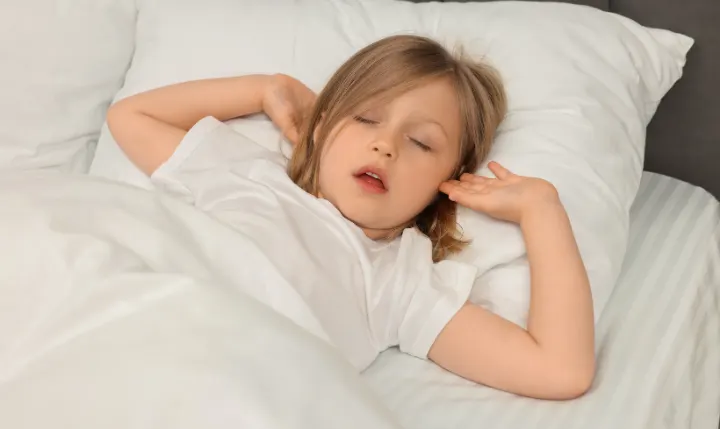
Mouth breathing in children can affect more than oral health. It may be connected to sleep quality, airway health, facial growth, dental development, and daytime focus. Recognizing the signs of child mouth breathing and understanding when a pediatric airway evaluation may be appropriate can help parents address potential concerns early. If your child frequently snores

As a parent, it can be heartbreaking to hear that your child is having trouble paying attention, sitting still, following directions, or managing their emotions. While these behaviors are often associated with ADHD, many families – and even some healthcare providers – overlook another possibility: poor sleep caused by an airway issue. At Atkins & Anderson DDS in College Station, TX, we

If your child snores every night, it’s easy to assume it’s harmless. After all, many people think snoring simply means someone is sleeping deeply. However, children should not snore regularly, and persistent snoring can be an early warning sign of an underlying airway issue that needs attention. At Atkins & Anderson DDS in College Station, TX, we know that breathing is essential for healthy growth and
