

What is Airway Dentistry?
At Atkins & Anderson DDS, airway dentistry is part of how we look at your family’s overall health. Your teeth, jaws, tongue, and airway develop together, and how they fit together affects how you breathe, how well you sleep, and how your face and smile grow. When the airway is narrow or the jaws haven’t developed fully, it can show up as snoring, mouth breathing, restless sleep, teeth grinding, or crowded teeth.
As one of the only airway-focused dental practices in Bryan–College Station, we evaluate patients of all ages for signs of airway concerns. We then build a conservative treatment plan that addresses the cause, not just the symptoms.
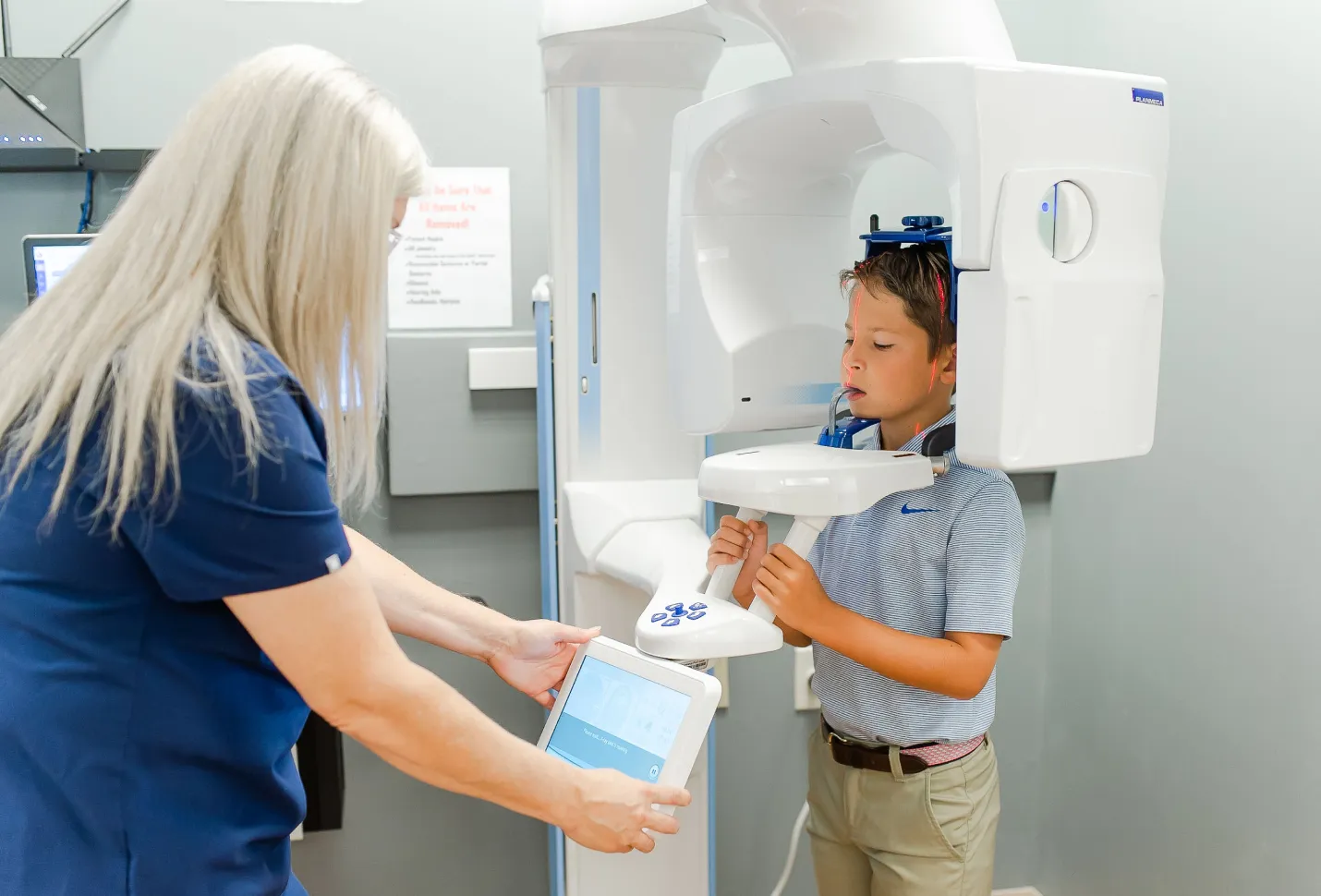
What Is Airway Dentistry?
Airway dentistry is an approach to dental care that looks beyond cavities and cleanings. It considers how the size and shape of the jaws, the position of the tongue, and the alignment of the teeth affect the airway, the path air takes through your nose and throat.
A traditional dental exam might note crowded teeth or worn enamel. An airway-focused exam also asks why those things are happening. Grinding, a narrow palate, or a tongue that rests low in the mouth can all point to a breathing pattern that’s worth a closer look. Our goal is to find those signs early and, when appropriate, guide healthier development or improve how the airway works.
How Breathing, Sleep, and Your Jaw Are Connected
Nasal breathing is the body’s natural default. When the airway is restricted, many people start breathing through their mouth, especially during sleep. Over time this can affect:
- Sleep quality: fragmented sleep, snoring, and frequent waking
- Jaw and facial development in children: a narrow upper jaw, crowded teeth, and a longer facial profile
- Daytime energy and focus: tiredness, irritability, or trouble concentrating
- Oral health: dry mouth, a higher risk of cavities and gum inflammation, and grinding or clenching
Read about the difference between mouth breathing and nasal breathing.

Who Can Benefit From Airway Dentistry in College Station?

More information from the ADA, click here to download.
Common Signs of an Airway Problem
You or your child may benefit from an airway evaluation if you notice:
- Snoring or noisy breathing during sleep
- Breathing through the mouth during the day or at night
- Restless sleep, frequent waking, or night terrors
- Teeth grinding or clenching
- Waking up tired, with headaches, or with a dry mouth
- Crowded or crooked teeth, or a narrow, high palate
- Dark circles under the eyes
- Daytime sleepiness, irritability, or trouble focusing
- Jaw pain or clicking (TMJ symptoms)


Schedule an Airway Evaluation in College Station.
Wondering whether snoring, mouth breathing, or poor sleep could be airway-related? Call (979) 846-1813 or request an appointment. For children, use our pediatric airway intake form.
