

Nearly 15% of Americans claim to be afraid of the dentist. You are not alone in your hesitation to schedule an appointment. Perhaps you had a bad experience or a painful procedure and you’re afraid your next visit will be a repeat. Or, maybe you’re ashamed of the state of your teeth because it’s been years since you went to the dentist. If you’re concerned about cost, you might be afraid you won’t be able to afford the procedure your dentist recommends. Those with low pain tolerance may be afraid that even a simple cleaning may hurt, plus it’s just uncomfortable having hands and metal tools roaming around your mouth. Whatever your reason for fearing a dentist appointment, Anderson and Atkins, DDS is here to help ease your anxiety. We want you to have a positive experience in our office and we want you to schedule regular visits so that your mouth can be healthy. Follow our advice and your next appointment may just be one of your best yet.
1. Be Honest
If you’ve had a bad experience either at our office or with your previous dentist, please tell us. We will do our best to alleviate your concerns and reduce your anxiety. If you tend to feel trapped in the chair during the exam, we can create a signal so that at any point you can let us know you need a break. We’re happy to stretch our backs while you take a deep breath. When you’re honest with us about how you feel, we can better support you.
2. Ask Questions
In many cases, patients believe a procedure is going to be worse than it actually is. They imagine the pain and create fear when it’s not necessary. If you’re concerned about a procedure, ask questions! We’ll walk you through the exam or the procedure step by step so that you have nothing to worry about.
3. Wear Headphones
We get it, the sounds of the machines in your mouth can be a little unnerving. We recommend bringing along your headphones. When needed, you can listen to your favorite playlist, podcast, or audiobook and drown out the noise of the drill. This won’t bother us, just let us know ahead of time so that we can still communicate instructions if necessary.
4. Utilize Relaxation Techniques
When you’re feeling anxious during an exam or procedure, you may benefit from practicing relaxation techniques. Sometimes by simply holding a stress ball or fidget spinner in your hands can distract you and help you feel calm. Taking slow, deep breaths and then exhaling for the
same amount of time can help lower your heartbeat and give you something else to focus on. Focus on releasing tension in various muscles of your body. When you can relax your mind, you will find that you are overall less anxious.
5. Ask for a Numbing Agent
Some people are more sensitive than others and that’s okay. You don’t need to be embarrassed by your pain tolerance. If you feel extremely anxious during a procedure or experience pain, ask us for a numbing agent. We may be able to apply a numbing agent to both ease your pain and your nerves.
6. Schedule Your Next Appointment
When you schedule regular dentist appointments, there are often fewer dental issues. With faster exams and fewer procedures, you may find that your fear of the dentist disappears.
Don’t let your fears keep you from scheduling an appointment with us at Anderson and Atkins, DDS. Even if it’s been years since you’ve had a cleaning, today is the day to face your fears and make the appointment. Call our office at (979) 846-1813.
Share

When parents think about their child’s dental visits, they usually focus on clean teeth and cavity prevention. But there’s another important aspect of your child’s health that many families don’t realize a dentist can help evaluate: the airway. At Atkins & Anderson DDS, we know that early airway screening is an important part of helping children grow, sleep,
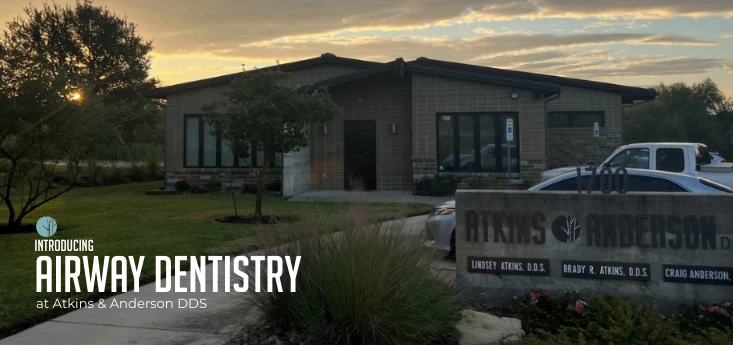
If your child snores, breathes through their mouth, or wakes up tired even after a full night of sleep, you may be witnessing signs of an airway problem, not just a quirky sleep habit. At Atkins & Anderson DDS in College Station, we are proud to now offer airway dentistry as part of our commitment

At Atkins & Anderson, DDS, we know how important healthy, peaceful sleep is for growing children. So when a child struggles with nightmares, restless nights, or ongoing sleep problems, parents naturally want answers. Did you know that poor sleep and frequent nightmares may be signs of an underlying airway issue? Kids rely on deep, restorative sleep to support healthy growth,

The year tends to end a lot faster than expected, and many patients are taken by surprise when they realize they may be overlooking (and not taking advantage of) valuable dental benefits. Most dental insurance plans renew annually, and any benefits that haven’t been used usually end up disappearing for good — no rollovers, no